

TL;DR
Can Claude replace your SEO agency? Not yet. Searches for “Claude SEO” have grown 256x in the last 12 months as businesses look for ways to do their own SEO with AI. But the data tells a clear story. AI-only content collapses in rankings within three months. The top results for “Claude SEO” in Australia are a GitHub repo and a Reddit thread, not authoritative SEO advice. And the most rigorous study on AI productivity (BCG and Harvard, n=758) shows AI lifts experts and actively misleads non-experts on judgement-heavy work. The companies winning organic search right now aren’t replacing their SEO teams with Claude. They’re equipping their SEO teams with Claude.
The pitch sounds clever. The data tells a different story.
You’ve heard it now. You’ve probably heard it more than once.
“We don’t need SEO people anymore. We’ve got Claude. We’ll DIY it.”
It’s the most seductive cost saving a marketing budget has seen in years. Sack the agency. Cancel the retainer. Point a chatbot at your blog. Ride the AI wave to the top of Google.
So we pulled the data. The exact search behaviour that represents this idea is one of the fastest-growing keyword clusters of the last 12 months. And what we found inside it should make any business leader pause before they sign that termination email.
This piece walks through the data on DIY AI SEO, why so much of it is failing, what real SEO actually requires in 2026, and where Claude genuinely fits in the workflow.
Searches for “Claude SEO” are exploding
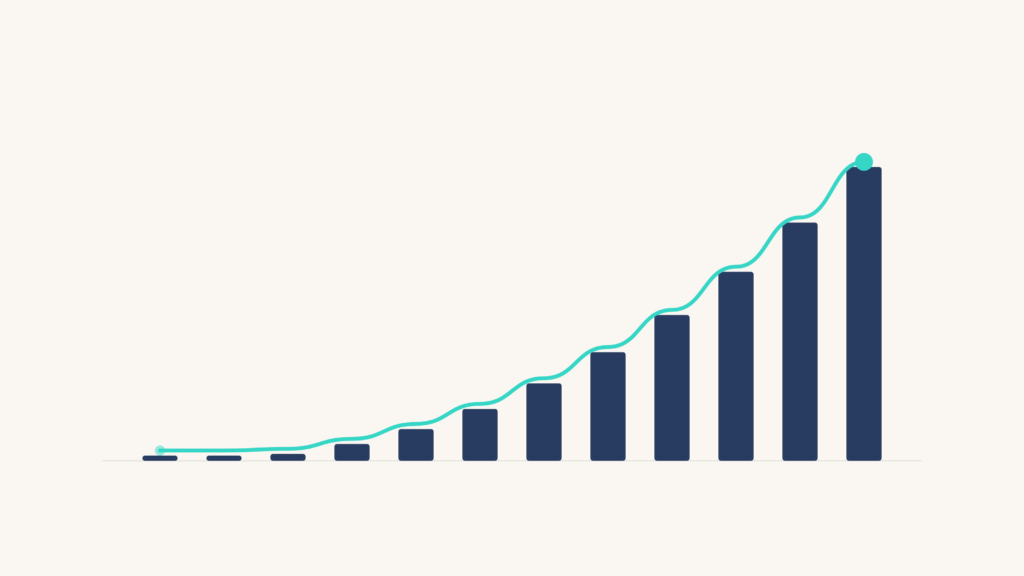
Globally, monthly clicks on the head term “claude seo” went from 138 in May 2025 to 35,441 in April 2026. That’s a 256-fold increase in a year. From December 2025 to April 2026 alone, the term grew 118x. This is one of the fastest-growing search behaviours we’ve seen in this category, ever.
In Australia, the picture is just as sharp. The “Claude SEO” cluster pulled 5,800 organic clicks in April 2026, up 44.65% month on month. Search volume is up 16% in the same window. And the SERP itself is morphing fast. The number of SERP features (AI Overviews, image packs, sitelinks, video carousels) on this cluster grew from 1 in November 2025 to 37 in April 2026. A 37-fold increase in feature density in six months. The same pattern playing out across the wider search landscape, just compressed.
There is enormous, accelerating demand for a clear answer to one question: can I run my SEO with Claude alone?
The top results for “Claude SEO” are not who you’d expect
Here’s where it gets uncomfortable.
In Australia, in April 2026, the top domains capturing this DIY AI SEO traffic were:
| Rank | Domain | Traffic share | What it actually is |
|---|---|---|---|
| 1 | github.com | 37.2% | A single developer’s repo (AgriciDaniel/claude-seo) |
| 2 | reddit.com | 26.2% | An r/SaaS thread titled “I created this free SEO engine prompt for Claude” |
| 3 | youtube.com | 10.0% | Tutorial videos by individual creators |
| 4 | claudeseoskill.com | 3.0% | A new domain, up 24,859% month on month |
| 5 | promptbuilder.cc | 2.1% | Free prompt library |
| 6 | nocodesaas.io | 1.7% | A no-code newsletter |
| 7 | skillsllm.com | 1.6% | An AI skills directory |
Combined, GitHub repos, Reddit threads, and YouTube videos hold three quarters of the click share on this topic in Australia.
What’s not in the top ten? Search Engine Land. Search Engine Journal. Moz. Ahrefs. Semrush. Any major SEO publication. Any SEO agency. Any recognised authority in the field. The most consequential conversation in search marketing right now is being shaped almost entirely by hobbyists, prompt-sellers, and Reddit users.
Organic difficulty on this cluster is 10 out of 100. Genuinely easy. The category is wide open because the experts haven’t shown up.
That’s the gap. Australian businesses are making decisions about replacing their SEO agency with Claude. They are searching for answers. And the answers they are finding come from a GitHub user and a Reddit thread.
Why DIY AI SEO is failing
If you’ve already tried running your SEO with Claude and the rankings haven’t come, you’re not the problem. The model is.
SE Ranking ran the largest public study on this question to date. They published 2,000 fully AI-generated articles across 20 brand-new domains in November 2024 and tracked them for more than a year. The early signal looked encouraging. By month one, 28% of pages were ranking in the top 100. By February 2025, three months in, that had collapsed to 3%. Sixteen months later, recovery was minimal. The pages stayed indexed. They just stopped being seen.
Originality.ai’s tracking study (sampling top-20 results across 500 keywords) found AI saturation in Google’s top results peaked at 19.56% in July 2025, then dropped to 17.31% by September following Google’s August 2025 spam update. Google’s 2025 Search Quality Rater Guidelines now explicitly tell human raters to apply the lowest rating when a page is “all or almost all” AI-generated with no original contribution.
Ahrefs’ larger study, across more than 600,000 pages, found the most useful result. There was zero correlation between the proportion of AI content and ranking position (correlation coefficient 0.011, effectively nil). AI alone neither saves you nor sinks you. The deciding variable is whether the content adds something a thousand other pages don’t already say.
Semrush’s State of AI in Content Marketing survey (n=879) put the consensus crisply. 87% of marketers use AI to help create content. 73% combine AI and human writing. Pure AI workflows are a minority, and an underperforming one.
The pattern is consistent. AI content does not have a ranking problem. AI-only content has a quality problem. If your Claude-generated content isn’t ranking, that’s why.
What’s actually happening on the SERP
Zoom out from the Claude SEO cluster and the wider context tightens the argument for keeping a real SEO operator in the mix.
AI Overviews now appear in close to half of all Google searches. Growth Memo’s tracking puts AIO presence at near 50% across queries. Pew Research found that when an AI summary appears, organic click-through rate roughly halves. Users get the answer at the top of the page and never scroll.
Citations rarely earn clicks. Search Engine Land’s analysis of ChatGPT referral data recorded a 0.69% CTR on cited links across 610,775 impressions. Inside Google’s AI Mode, Growth Memo’s user behaviour study found a 100% zero-click share. Being mentioned by an AI is no longer a guaranteed traffic event. It’s a brand event.
The traffic that does come through converts at multiples. Semrush’s AI search study valued the average LLM visitor at 4.4x the average traditional organic search visitor. SE Ranking found average LLM session durations of 9 minutes 19 seconds against 5 minutes 33 seconds for organic, with Claude users sitting above 18 minutes. People arrive better informed, more committed, and more likely to convert.
There is less traffic to win. The click is harder to earn. Each visitor is worth more. The margin for sloppy execution has collapsed at the exact moment thousands of businesses are considering replacing experienced operators with chatbots.
The expertise gap, measured
The most important study on whether AI can replace expert work is the BCG and Harvard Business School field experiment with 758 BCG consultants. Three findings sit at the heart of it.
For tasks inside the AI frontier (creative, structured, well-understood), consultants using GPT-4 completed 12.2% more work, 25.1% faster, with over 40% higher quality. Junior consultants gained 43% in performance. Senior consultants gained 17%. AI lifts everyone. It lifts juniors most.
For tasks outside the frontier (analytical, judgement-heavy, requiring synthesis of conflicting information), the AI-assisted group was 19 percentage points less likely to produce a correct answer. AI didn’t help. It actively misled. The consultants couldn’t tell.
The third finding matters most for SEO. Researchers identified two operating styles. “Centaurs” delegated cleanly: humans on judgement, AI on production. “Cyborgs” wove the two together at every step. Cyborgs got the best results. They were also overwhelmingly experienced operators who already knew what good looked like before they prompted.
This is the gap. The space between an SEO who knows when an AI output is wrong and a business owner who doesn’t. It is the gap between assistance and replacement. And it is the precise reason a GitHub repo and a Reddit thread are currently the loudest voices answering “can I do my SEO with Claude?”
What real SEO requires, and where Claude actually helps
Strip out the noise and SEO in 2026 is five jobs. Claude helps with every one of them. None of them are Claude’s job to own.
Search intent validation. Claude can suggest 50 keyword variations in 30 seconds. It cannot tell you which ones your customers actually use, which queries trigger AI Overviews you can realistically win, or which look commercial but are dominated by listicles you’ll never out-rank. That’s a strategy call, made with data.
Topical authority and information architecture. LLMs reward sites that cover a topic comprehensively, with internal linking that mirrors a knowledge graph. Build that wrong and no volume of well-written articles will lift you. Claude can draft a content map. It cannot decide which topics belong to your brand and which are wasted effort.
Technical foundations. Crawl budget, indexation, schema, Core Web Vitals, log file analysis, fixing the cannibalisation that costs most sites 20 to 30% of their visibility before a single new article ships. Patrick Stox calls technical SEOs “the janitors of the internet” and means it as a compliment. AI has no hands.
Distribution and trust signals. Kevin Indig’s framing is the cleanest in the industry. Visibility is one layer. Trust is another. Trust is built from evidence, experts, validation, and reputation. Citations from credible sites, partnerships, real authors with real credentials, original data, proven customer outcomes. None of this is generated. It is earned and curated.
Analytics and course correction. The sites quietly winning right now are reading GA4, Search Console, and AI visibility data weekly. Killing what isn’t working. Reinvesting in what is. Claude can summarise a dashboard. It cannot decide what to do next when conversions detach from rankings.
Are you running SEO with Claude, or running Claude as SEO?
A simple test cuts through the noise.
The first means an experienced operator validates intent, sets the strategy, briefs Claude tightly, edits with judgement, fixes the technical layer, builds genuine authority signals, and reads the data weekly. Claude is the leverage. Strategy is the asset.
The second means a chatbot is your strategy. There is no validation, no architecture, no technical work, no distribution, no measurement. There is only output. And output without judgement, on the SERP of 2026, is a slow disappearance.
If you’ve already tried DIY AI SEO and the traffic isn’t coming, this is almost certainly why.
What the businesses winning organic are actually doing
The companies pulling ahead in organic search right now share a profile.
They have an SEO function, in-house or partnered, that has materially raised its AI fluency in the last 18 months. They use Claude (and ChatGPT, Gemini, Perplexity) for ideation, drafting, brief generation, technical audits at scale, schema, internal linking analysis, log file parsing, and content clustering. They do not use AI to decide what gets published, what to optimise next, or what their brand stands for.
They’ve moved from being SEO operators to being SEO operators with AI leverage. Output is up. Quality is up. Cost per asset is down. Visibility, in classic search and in AI search, is climbing.
The “fire your SEO, buy Claude” companies are also producing more content. They are simply producing more content nobody finds.
Before you replace your SEO agency with Claude
Ask the questions that actually matter.
Who is validating search intent? Who is reading the analytics? Who is fixing the technical issues that AI can’t even see? Who is deciding what gets published, and on what evidence? Who is building the trust signals that AI Overviews and LLMs use to decide who gets cited?
If the honest answer is “Claude,” you don’t have an SEO strategy. You have a publishing schedule.
35,441 people last month searched for the answer to this exact question. They found a GitHub repo and a Reddit thread. The cost saving looks real on a spreadsheet. The growth ceiling shows up six months later, when traffic plateaus, conversions drift, and the businesses that kept their experts (and gave them better tools) have quietly taken your share.
Frequently asked questions
Can Claude replace your SEO agency?
Not in 2026. Claude is excellent at execution tasks inside a defined SEO strategy: drafting briefs, generating outlines, parsing log files, suggesting schema, clustering keywords. It cannot validate search intent, decide what to publish, run technical audits with judgement, build authority signals, or read your analytics and change course. The BCG and Harvard study (n=758) found AI lifts expert performance significantly but actively misleads non-experts on judgement-heavy work. The businesses winning organic right now use Claude alongside SEO experts, not instead of them.
Why isn’t my Claude-generated content ranking?
Three likely reasons. First, AI-only content has a quality problem (not an AI problem). SE Ranking’s study of 2,000 AI-generated articles found rankings collapsed from 28% in the top 100 to 3% within three months. Second, Google’s 2025 Search Quality Rater Guidelines now apply the lowest rating when content is “all or almost all” AI-generated with no original contribution. Third, ranking requires more than content: technical foundations, topical authority, internal linking, and trust signals all need to be in place. Without those, even the best AI prose sits unread.
Is DIY AI SEO worth trying for a small business?
For very small operations on tight budgets, a Claude-assisted content workflow can produce serviceable output. But “serviceable” rarely ranks in 2026. Search difficulty has risen, AI Overviews have collapsed click-through rates by roughly 50% (Pew Research), and Google’s spam updates are removing thin AI content from indexes. Most small businesses get better return from a smaller, expert-led SEO programme using AI for leverage, than a larger DIY programme without strategic oversight.
What can Claude actually do well in an SEO workflow?
Inside the right strategy, Claude is a genuine productivity multiplier. It is strong at: drafting content briefs from research inputs, expanding outlines, generating schema markup, parsing competitor content for gaps, summarising long technical documents, drafting alt text and meta descriptions at scale, clustering keywords by intent, and writing first-pass copy that an editor can sharpen. The BCG study showed quality lifts of over 40% on tasks inside its capability. The catch is the strategy and editing layer around it.
What’s the difference between AI SEO and traditional SEO in 2026?
Traditional SEO targets Google’s classic ranking algorithm. AI SEO (sometimes called AEO or GEO) targets the new AI surfaces: Google AI Overviews, ChatGPT, Perplexity, Gemini, Copilot. The two overlap heavily on fundamentals (technical health, topical authority, content quality) but diverge on tactics. AI search prefers structured, declarative content with clear entities and citations from trusted sources. The businesses winning in 2026 work both layers in parallel.
How do I know if my SEO setup is built for AI search?
Five quick checks. (1) Are you appearing in AI Overviews and ChatGPT citations for your priority queries? (2) Is your technical foundation (Core Web Vitals, schema, indexation) clean? (3) Do you have genuine topical authority on the topics you compete for, or scattered content? (4) Are your trust signals (author credentials, original data, third-party citations) clearly visible? (5) Are you reading AI visibility data alongside your GA4 and Search Console weekly? If you can’t answer yes to most of these, the gap is your roadmap.
If you want to know whether your current SEO setup is built for the AI search era, or just keeping the lights on, we’ll run the audit. No retainer pitch. Just the diagnostic, the gaps, and what to fix first.